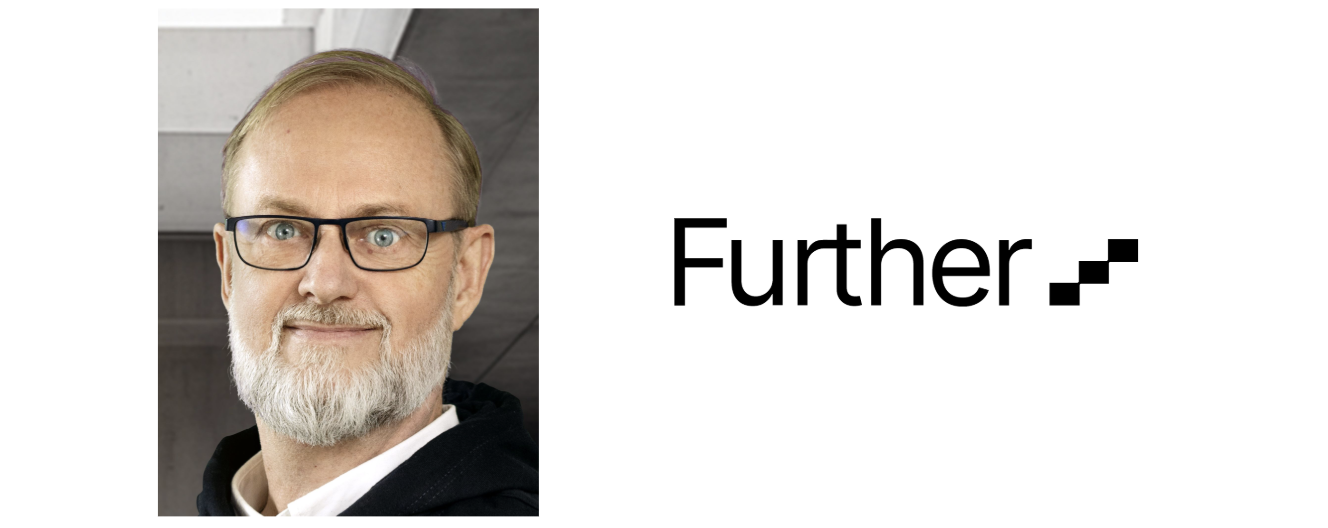
Angel investor and Creandum co‑founder Stefan Lindeberg on Spotify, Lovable, AI and staying sane in startup land.
Few people embody the modern Nordic tech story quite like Stefan Lindeberg. Trained in computer science, he started out writing compilers and low‑level code before spending the 1990s helping Cisco build Europe’s internet plumbing. When the company grew from scrappy challenger to 40,000‑employee giant, he realised he missed being “three people with a PowerPoint” taking on incumbents.
That itch pulled him into startups and, eventually, into co‑founding Creandum in 2003 - a new type of European VC that would go on to back Spotify and other Nordic success stories. Today he calls himself a “professional angel”, investing alongside funds like Luminar Ventures in everything from deep‑tech AI to tools like Lovable. We met at the Luminar office to talk about how he stumbled into venture, why Spotify was anything but an obvious bet, how he thinks about AI hype - and why founders should talk more to customers and celebrate more often.
You’ve been in Nordic tech for decades. How did the journey actually start?
If I can learn something new today, it’s a good day - that’s still my guiding principle. I’ve always wanted to play with new tech. After a master’s in computer science I did fairly advanced programming, things like compiler design and code generation.
Pretty soon I realised I also had a knack for explaining technology and putting it into context: which customer problem it solves, how we can use it internally. I loved combining pieces - networks, software, hardware - into something new. That led me into internet and IP infrastructure in the 90s, first at Network Systems and then at Cisco.
What pushed you out of Cisco and into venture and startups?
Cisco went from a few hundred people to around 42,000 while I was there. In the beginning, we were this weird small company fighting Ericsson, IBM, and the big telecom and datacom players; I loved that underdog feeling. Then suddenly we were the big incumbent.
I got tired of internal politics. Thanks to stock options I’d more or less shrugged at as a young engineer, I could resign without another job and think about what I really missed. The answer was “three guys with a PowerPoint fighting Google, Microsoft and Apple.” That took me into a bunch of Swedish startups and, eventually, into advising one UK and one Swedish VC fund - my way into venture.
How did that become Creandum - and the Spotify investment ?
Through those advisory roles I met people like Staffan Helgesson and together we started Creandum in March 2003. We were basically a startup VC: a bit naive about the boring stuff, which probably helped us get going.
Spotify became our claim to fame, but it was not an obvious investment. We were more B2B‑oriented, and consumers felt scary - lots of macro risks we couldn’t control. From first meeting them to actually investing took more than a year, with pauses where both sides matured. One key reason we did the deal was my partner Fredrik Cassel, who pushed hard internally. Without him, who knows?
You now tell founders not to fundraise forever. Is that linked to that experience?
Yes. If a process takes too long, everyone gets tired - it’s like dating and dating and nothing happens. My philosophy is: spend time together and either reach a conclusion or stop meeting for a while.
The same goes for founders. If you’ve been fundraising too long, stop. Focus on building the company and maybe come back to investors six months later.
What’s the biggest change you’ve seen in early‑stage investing since the 90s?
In the early Nordic VC days, many people came from consulting and believed you could analyse a seed‑stage startup in Word and Excel. We saw 60–100 page business plans and sophisticated discounted cash flow models. That’s not how you value a pre‑revenue tech company. We spent too much time on numbers with no connection to reality.
If I had to summarise what actually matters, it’s team, team, team. I’m sceptical of solo founders - it’s extremely lonely being the only entrepreneur. I strongly prefer teams who have done something together before; match‑made teams with no shared history often crack when it gets tough.
When a founding team walks into the room, what are you really looking for?
Chemistry - within the team and between them and me. I ask a lot of questions, including stupid ones, because customers will ask stupid questions. If founders react as if the other person is too stupid to talk to, that’s a huge red flag.
I also look at how well they can explain what they do. One example is First QFM, where Luminar and I invested together in AI for quantum computing - about as hard as it gets technically. That team can explain it so we understand it and can retell it in 30 seconds to someone at Amazon or a US VC. Early investors need to be able to pitch their companies by heart; if we can’t, the chance of success is basically zero.
You’re doing more and more deals together with Luminar. What works about that relationship for you?
I first met Magnus and Jacob when they were raising Luminar’s first fund, roughly a decade ago. Since then we’ve been involved together in several companies, and over the last year especially - with investments like Motorica, Intui and First QFM - the collaboration has intensified.
What I like is that I genuinely enjoy the whole team. I feel comfortable coming into the office and I have a sense of who to introduce to whom. I don’t tell a founder “talk to Luminar”, I say “talk to Jacob” or another specific partner, because I know their backgrounds and can match them to the company’s domain. It’s the same theme again: team and chemistry, just at the investor level.
You’ve become very active in AI. How do you see the current boom?
My view is that roughly 80% of the companies calling themselves “AI companies” today won’t use that label in five years - probably earlier. They’ll just be applications running on someone else’s models. There is value in that, but then you need very strong execution, because there will be others doing similar things in each niche.
Five years from now your website shouldn’t say “AI tools for property owners”, it should just say “the best tools for property owners”. Nobody brags that something is “in the cloud” anymore - it’s assumed. AI will be the same, which is why I’ve sometimes told founders not to brand themselves as “.ai”.
So what makes an AI startup interesting enough for you to invest?
Ideally three things, and I want to see at least two. First, unique data: do you have data others don’t, and are you allowed to use it, keep it and grow it? Second, technical depth around models - either your own, or a meaningful way of combining and tuning existing ones. Third, deep sector knowledge of a specific problem in a specific industry.
Motorica is a good example: they tick all three boxes. I also think we’ll move towards smaller, more focused models. Training a great model once and never updating it means it depreciates; you need fresh data and retraining.
You were an early backer of Lovable. What stood out?
The speed surprised me - in a very positive way. When I first met the team, back when they were still called GPT Engineer, the demo didn’t work. As a former engineer, I’m used to pre‑alpha bugs, so that didn’t scare me.
What really impressed me was Anton’s clear plan to build momentum and FOMO in a crowded “AI coding” space. I saw the potential of what they were doing, but also that many teams were circling similar ideas. Anton had a credible strategy for getting users and investors excited. They also understood early that you need recurring revenue, not just one‑off wow moments - which is why they bought Swedish team Molnett to strengthen hosting and post‑deployment services.
You repeat “talk to your customers” like a mantra. Why is that still needed?
Because too many founders still don’t do it. I like to tell the story of a solo founder I support who built a small app for running outdoor games at kids’ birthday parties. Every weekend, people use it; every week, he emails one of them and asks for feedback. Almost everyone says yes, and he learns a lot.
At the same time, I’ve seen B2B companies with big enterprise logos that have never spoken to those customers. When they finally called a large German insurance client, they not only learnt how the product was used - they got introduced to another department with the same problem and closed more business. That’s why I like pushing developers to spend a couple of hours a week as de‑facto customer success managers. You quickly see which small changes would have a big impact.
You also talk a lot about not over‑engineering term sheets. What’s your main point there?
Early‑stage investing has to feel like everyone is on the same side of the table. Over‑complicated structures - especially some convertibles with lots of moving parts - can easily misalign incentives between founders and investors. People think they’re being clever by postponing valuation discussions, but they’re actually making things more complex and sometimes creating conflicting interests.
My advice is simple: don’t try to be too smart. Keep terms understandable. And if founders tell me, as in one current case, “we like the fund but we don’t like this specific partner”, then we shouldn’t take that money.
You’re very open that half of early‑stage investments fail. How do you stay positive - and why all the celebrating?
The portfolio math is what it is: roughly half the companies fail, a couple do okay and a couple do really well. You can’t know in advance which is which. One coping mechanism is to celebrate in advance. If you’re lucky, you celebrate twice; if not, at least you celebrated once.
I love the story of a Norwegian angel who bought a stack of boxes for a startup, each with a milestone on the envelope - 50k in revenue, 100k, first international customer. Every time the team hit one, they opened a box: sometimes just beer and pizza, the last one was an offsite in Malta. Lots of small celebrations, then back to work on Monday.
Another Norwegian friend taught me to always have champagne in the fridge. It lowers the threshold. On a sunny Stockholm Saturday, I might open a bottle on the deck. When neighbours ask what we’re celebrating, I say: “It’s Saturday, it’s beautiful, we’re outside, and the champagne is cold.” That’s enough.
When founders get timeless guidance on teams, data and momentum, progress compounds. Lindeberg’s experience shows how operator judgment can shift trajectories early on- a consistent focus for Luminar’s angel network. Continue to follow the Angel Access interviews for more operators and angels across the ecosystem.